To choose chair leg protectors for hardwood floors, inspect the part of each leg that actually touches the floor, then match a protector to that shape and to how often the chair moves. For dining chairs, a properly fitted felt contact surface is a useful starting point. Keeping it clean and attached matters as much as choosing the material.
In this guide
A packet marked “universal” cannot tell you whether it fits a narrow metal foot, an angled wooden leg, or an existing adjustable glide. This guide focuses on everyday household chairs on finished wood floors in the United States. Check your furniture and flooring manufacturers’ instructions before changing installed feet or using a new protector material.
Look underneath every chair before buying pads
Move one chair to an accessible, stable position and inspect all its feet. Note whether the bottom is round, square, rectangular, or irregular. Check for an existing cap, screw-in glide, exposed fastener, rough edge, or missing insert. A damaged foot needs attention before another layer is added over it.
Measure the contact surface rather than the leg higher up. A tapered leg can be wider near the seat, and an angled leg may touch the floor along only part of its end. Record width and length, or diameter for a round foot, in inches. If the chair has different front and rear legs, record both.
Repeat the inspection across the set. Secondhand chairs, replacement legs, and past repairs can leave an apparently matching group with different feet. Buy from the actual measurements, not the appearance of the chair from above.
While you are there, check for a loose joint or wobble. A protector is not a repair for damaged construction. Solve the structural issue according to the maker’s instructions before judging whether the chair moves properly.
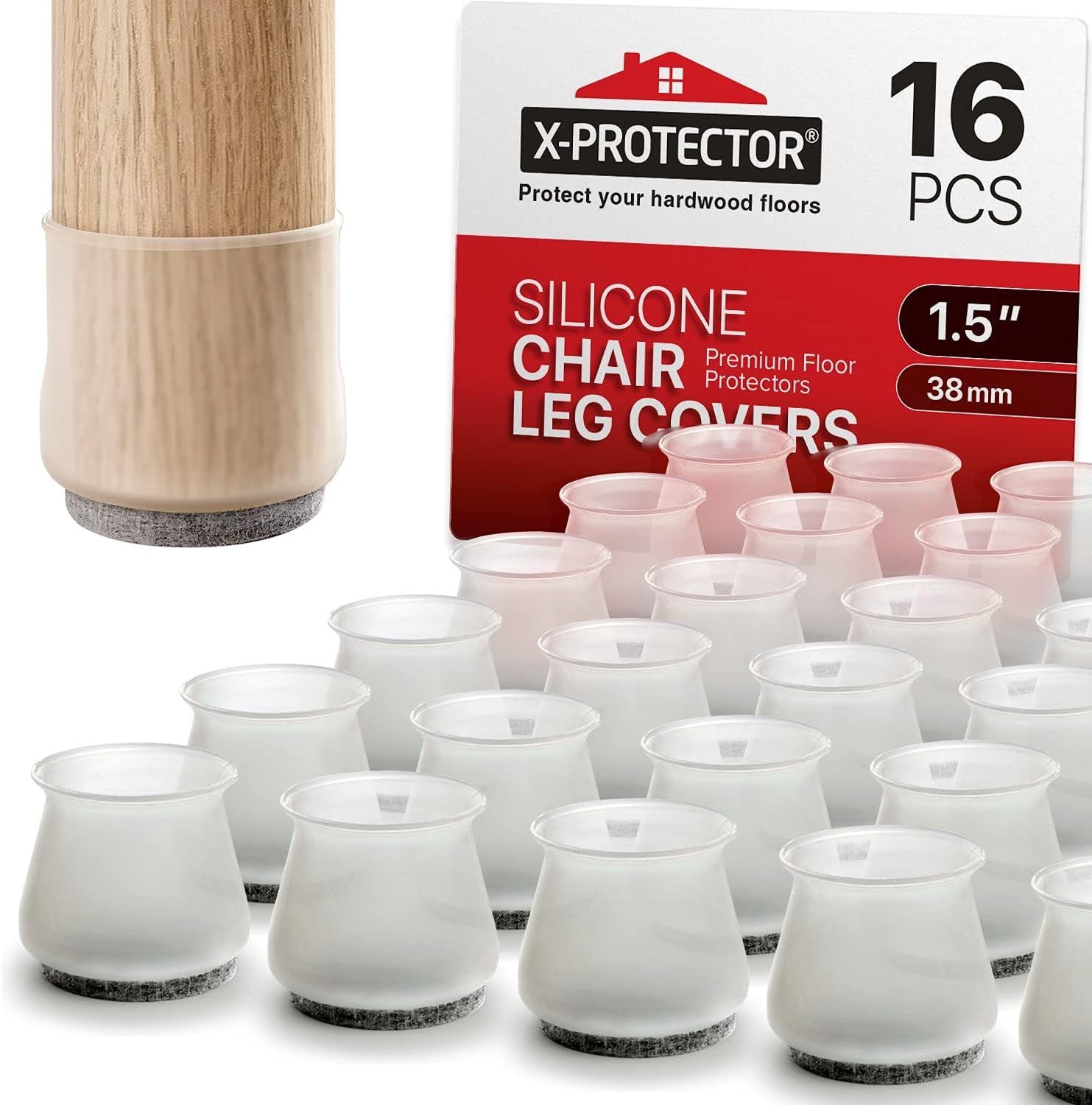
Choose the floor-contact material for repeated movement
The National Wood Flooring Association’s scratch-prevention guidance recommends floor protector pads under furniture legs that directly contact wood floors. That advice applies to the contact points, including the feet that are easy to overlook behind a table.
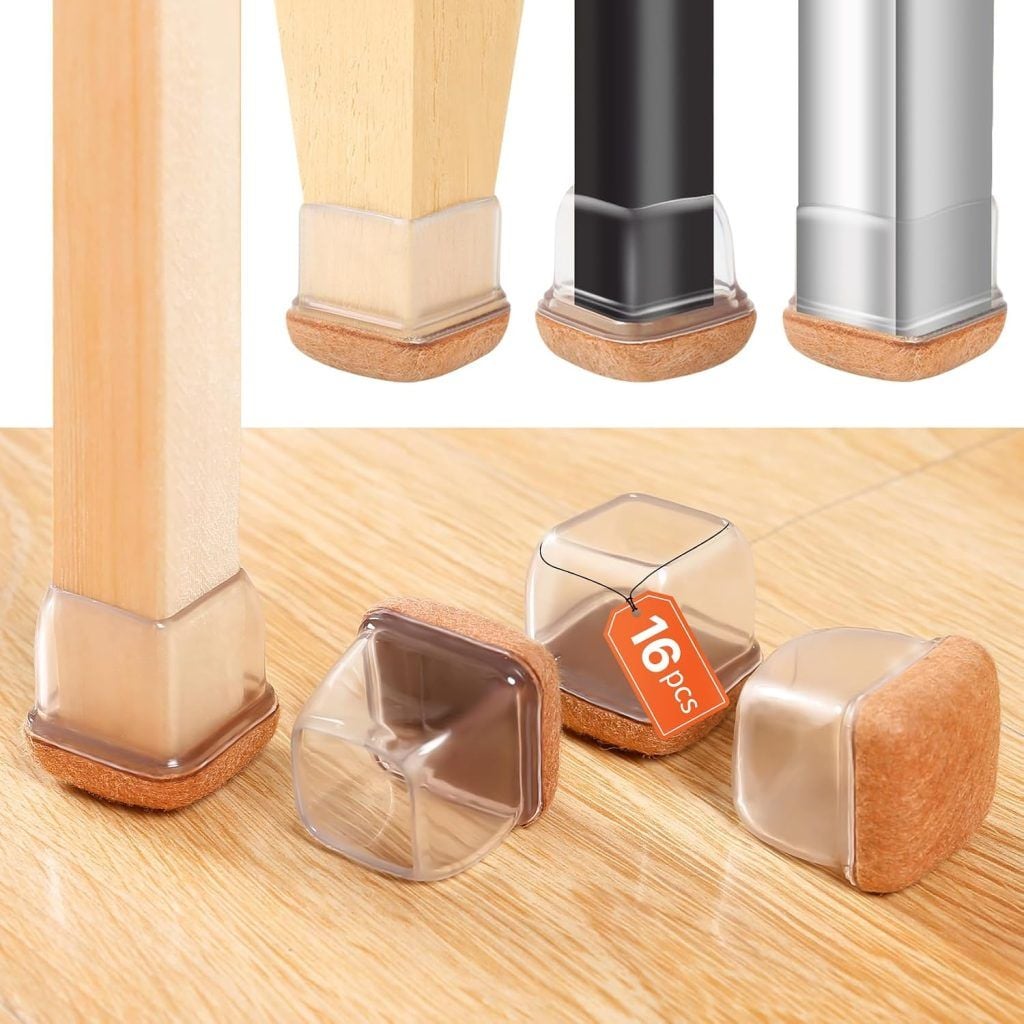
Bona’s furniture protection guide identifies felt as a useful option for the frequent movement of dining and kitchen chairs. It also warns that selecting the wrong glide material can damage a floor, and notes possible scuff marks from rubber. A material that works on carpet is not automatically the right choice for your wood finish.
Read the protector’s description for the intended floor surface, attachment method, and furniture use. Favor a clear statement about suitability for your floor over a broad promise to work everywhere. Ask the floor manufacturer when compatibility is uncertain, especially if the finish has its own care restrictions.
Do not confuse a protector for regular chair movement with equipment intended to relocate heavy furniture. This article does not establish load ratings or recommend sliding a heavy cabinet on dining-chair pads.
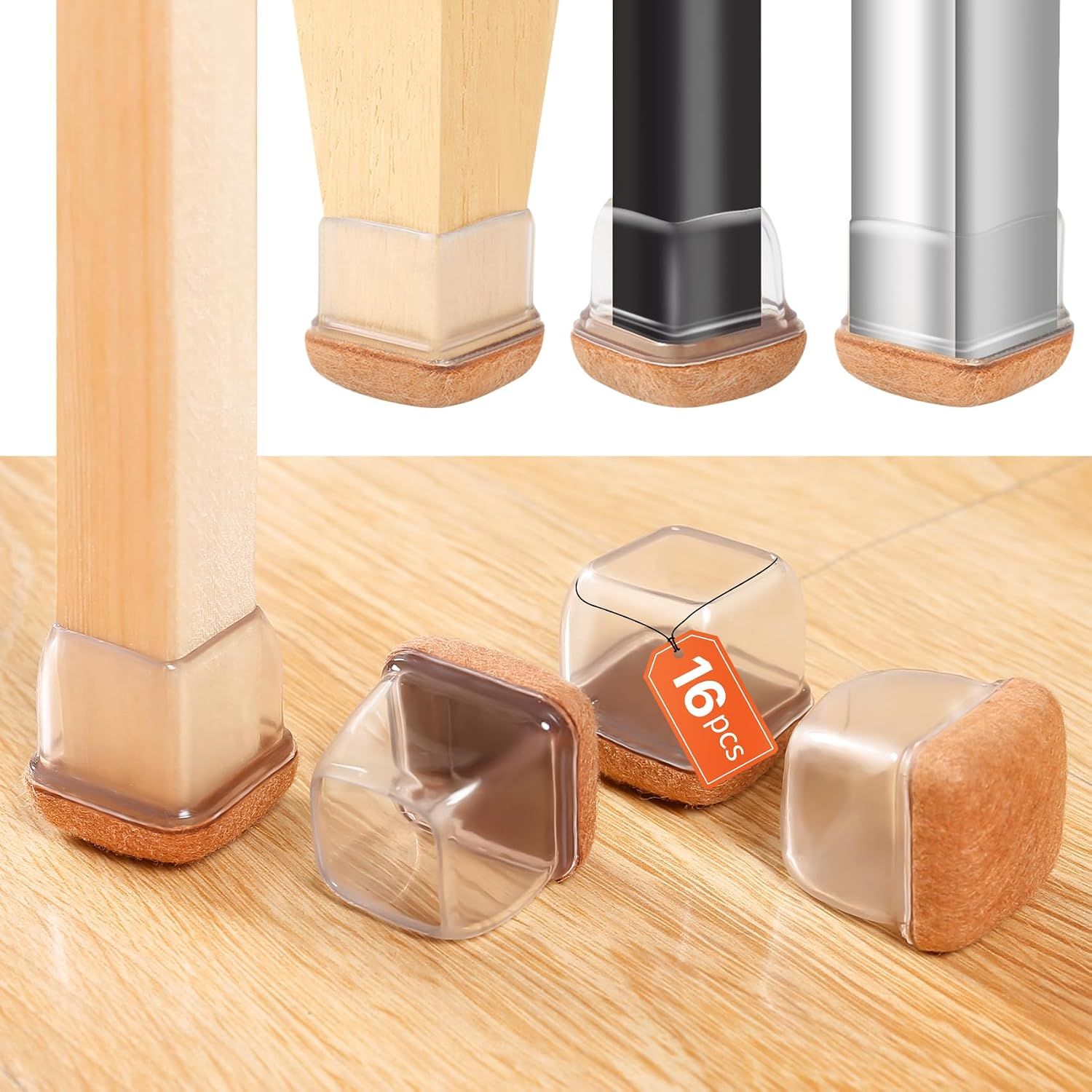
Match the attachment to the actual foot
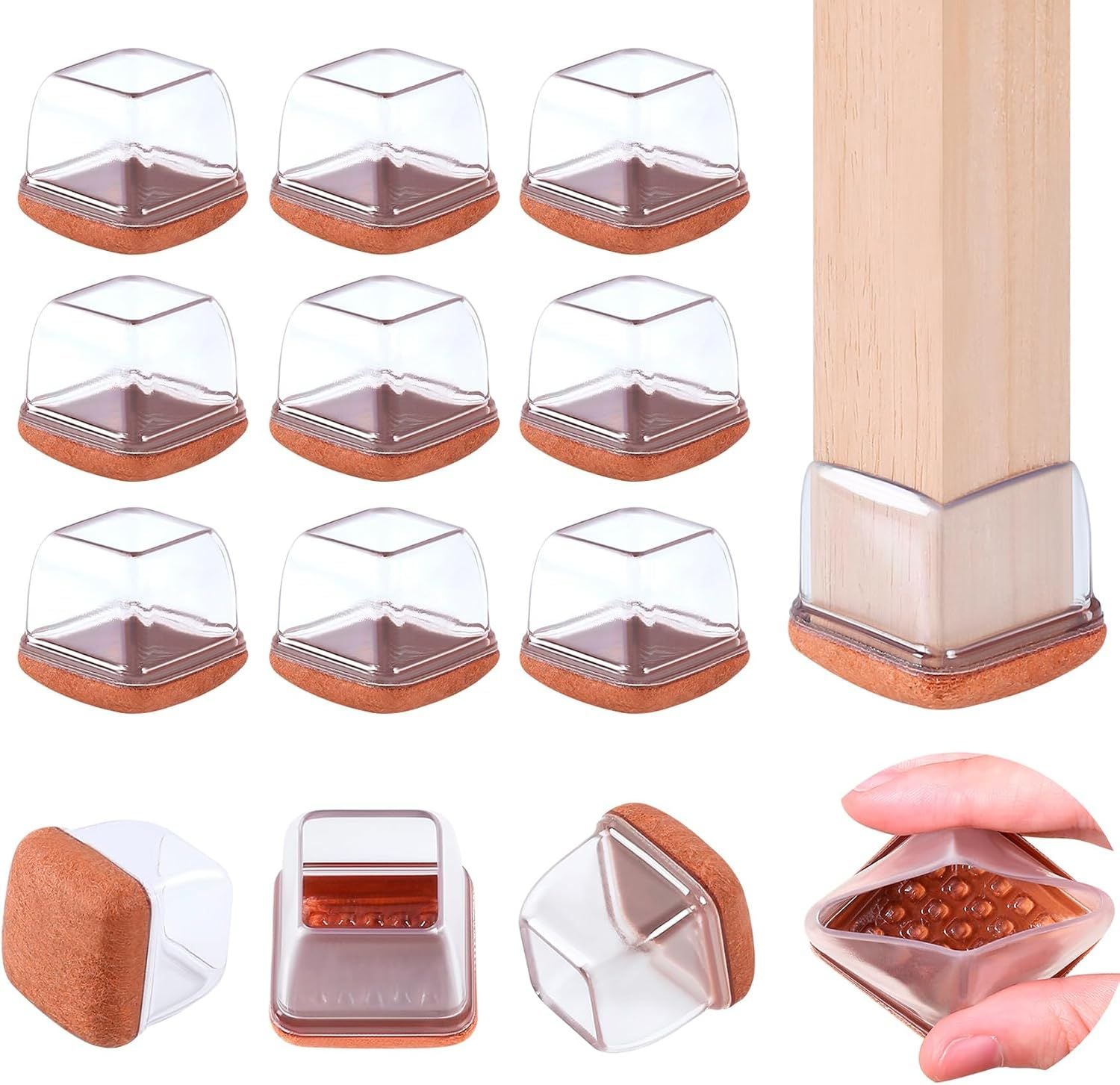
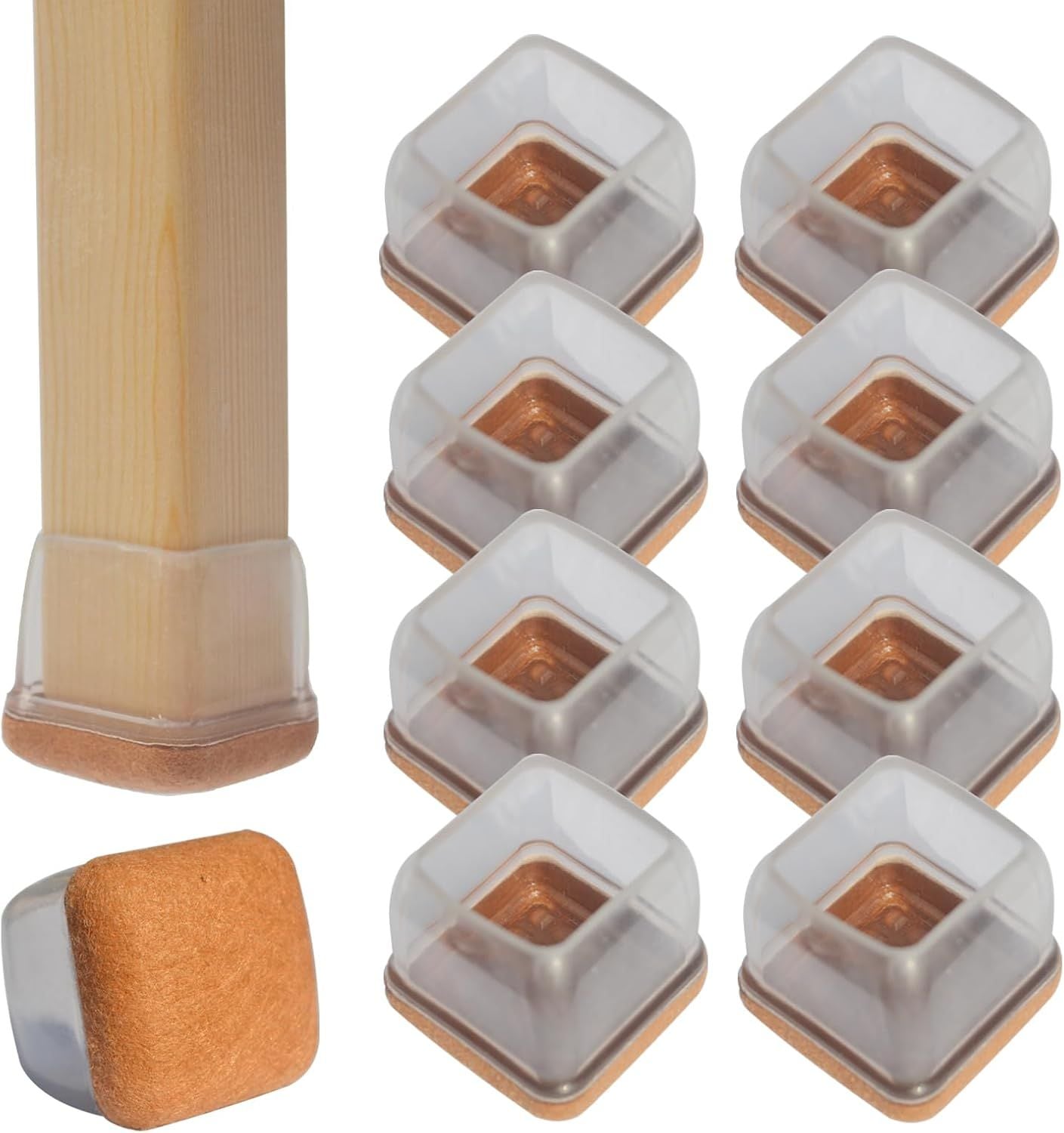
Compare how a protector stays attached before choosing its color or package size. An adhesive-backed pad needs an attachment surface suited to its adhesive. A slip-on cap needs the correct size and shape to remain fitted. A replacement glide needs to match the chair’s existing system.
Follow the product’s preparation and fitting directions. Remove loose debris and remnants of a failed pad as instructed, and let a cleaned surface dry before applying a product that requires it. Do not add household glue or a stronger solvent unless the relevant manufacturers approve that method.
Size the protector so the intended contact area is covered without a loose edge folding under the foot. If a pad must be trimmed, confirm that the product allows trimming. A poorly fitting cap that rotates or a pad that creeps away from the leg should be reconsidered rather than repeatedly pushed back into place.
If an installation requires drilling, nails, or removal of an adjustable foot, confirm that the chair maker allows the change. Different attachment styles are options to evaluate, not interchangeable upgrades for every leg.
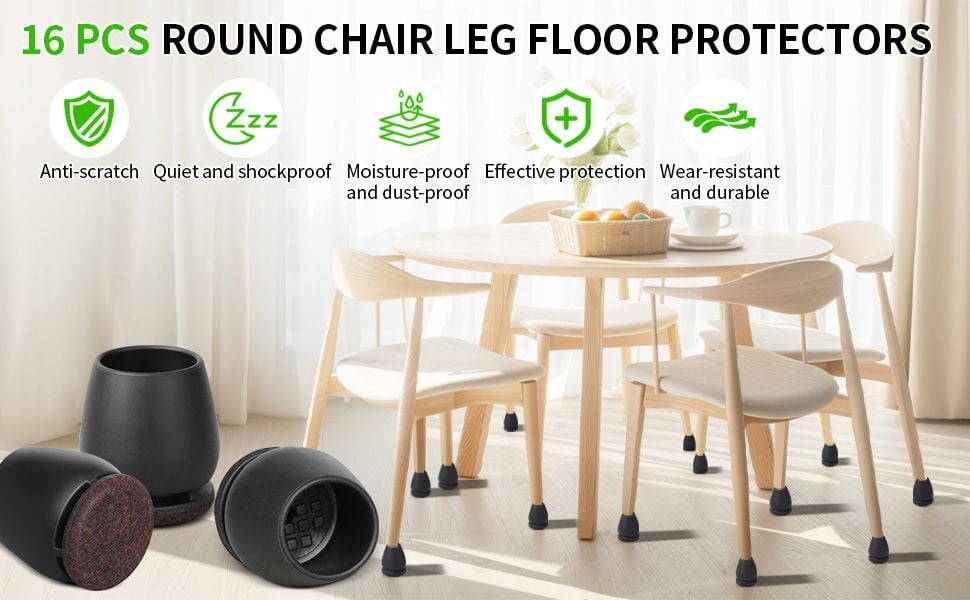
Test one chair before converting the whole set
Use one chair as a fit check. Install its protectors according to their directions, put the chair upright on a clean floor, and check that every foot rests as intended. Test the normal movement used to approach and leave the table. Stop if a protector shifts, comes loose, or leaves a mark.
Check the chair’s fit at the table as well. Added material changes the assembly at the floor, so review the seat and arm clearance after fitting. Our guide to dining chair height and table apron clearance explains which furniture dimensions to compare; it is separate from the protector manufacturer’s installation instructions.
For example, a household might find that all four caps fit securely on one chair but a rear leg on another has a different replacement foot. That is a reason to solve the second chair’s fit individually. It is not a reason to force the same cap onto every leg.
Only convert the remaining chairs after this first check. Keep the product information so you can order the same compatible replacement later.
Inspect the pads and floor together
Protectors do not remove the need to clean the floor. Bona notes that unprotected furniture can grind grit into a finish and that even durable pads will not protect properly on dirty floors. Treat the floor-contact surface as something that needs inspection, not an accessory you install and forget.
Look underneath frequently moved chairs during normal cleaning. Check for embedded debris, thinning or displaced felt, a missing cap, or a newly exposed hard edge. Follow the protector’s cleaning directions, and replace a worn or failing part rather than trusting the rest of the set to compensate.
There is no replacement interval that this guide can establish for every home. Movement, debris, the pad, and the floor all differ. Inspect sooner when a chair starts scraping, feels different, or leaves a visible mark. Stop moving it until you have found the cause.
Use a simple record for future replacements
Keep a short note for each chair type: foot shape, measured contact dimensions, installed protector, floor compatibility, and any different rear-leg fitting. A photograph of the underside and the product label can make the next purchase more precise than guessing from a worn pad.
The useful combination is straightforward: a sound chair, a protector that fits its actual feet, a material suited to the floor, and a clean contact surface. Check those together whenever a chair behaves differently. That routine is more dependable than treating any single package of pads as a permanent guarantee against scratches.