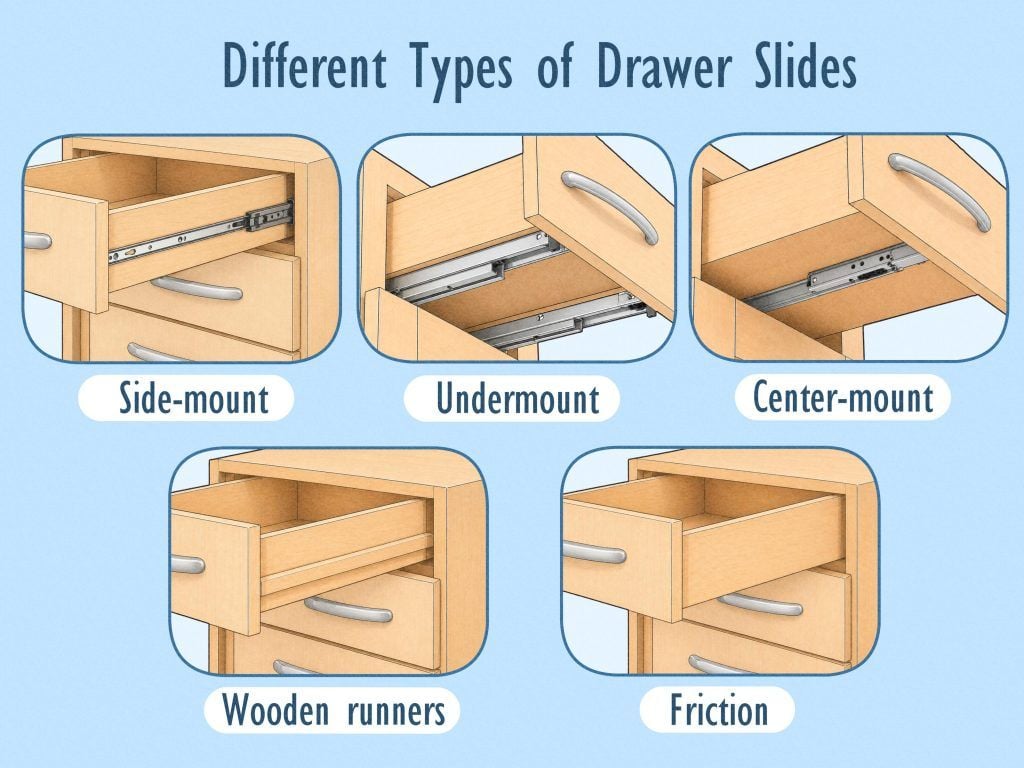
Buying replacement drawer slides starts with identifying what is already supporting the drawer. A pair of metal runners visible along the sides, two concealed runners underneath, and one rail down the center are different mounting systems. A replacement can have an attractive soft-close feature and still be unsuitable for the drawer box you own.
In this guide
For a dresser, nightstand, or desk, record the existing mounting method and available space before shopping. This guide uses Rockler’s drawer slide selection guide and its slide glossary to explain the terms. It is a way to prepare a replacement specification; the exact slide’s technical drawing and your furniture manufacturer’s instructions determine whether a part actually fits.
Identify the mounting method before choosing features
Empty the drawer and inspect the accessible hardware. Photograph both sides, the underside, the cabinet opening, and any stamped brand or model numbers. Before removing the drawer, find its release procedure in the furniture or hardware instructions. Rockler describes both lever and friction disconnects, so a drawer that does not release with one familiar movement should not simply be pulled harder.
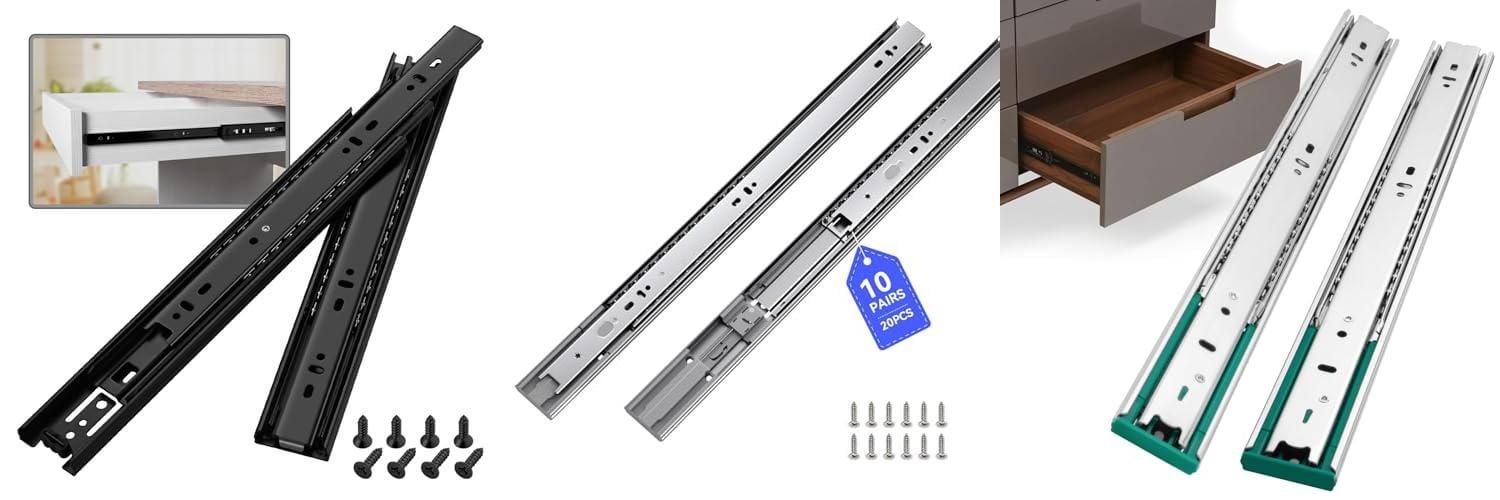
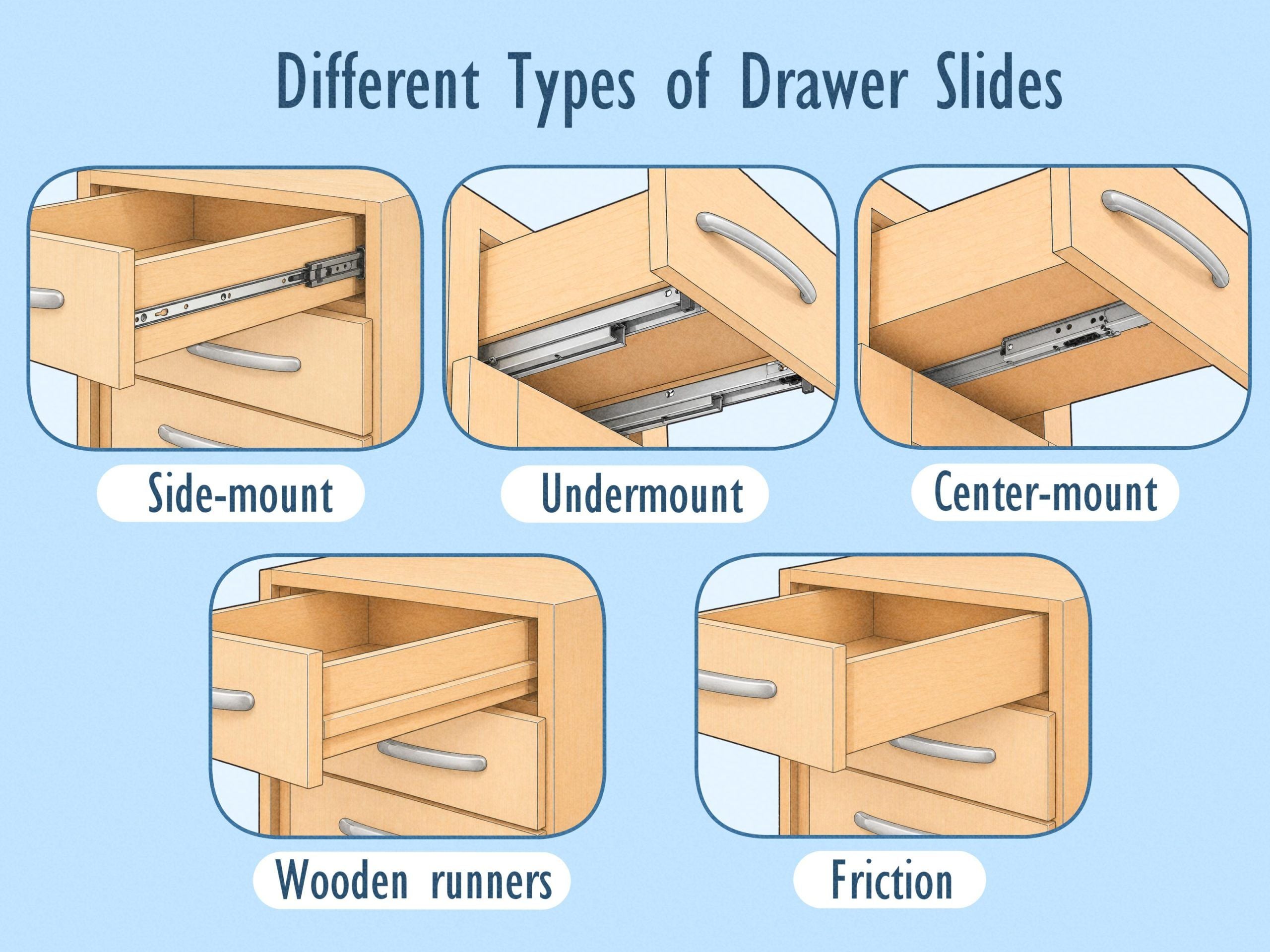
Side-mount slides attach along the drawer’s sides. Common versions use either telescoping ball-bearing members or a roller traveling in a track. Some roller systems wrap around the lower edge of the box. Rockler explains that these may be called bottom-mount slides even though it classifies them as side-mount because they remain visible at the sides and need specific side clearance. The word “bottom” alone is therefore not enough to identify a replacement.
Undermount slides, in the usual modern hardware terminology, are a concealed left-and-right pair beneath the drawer. Their requirements can include particular box dimensions, side thicknesses, and rear notches. Center-mount slides use a single runner along the middle underneath. Seeing no metal on the side does not tell you which of those two arrangements you have: look underneath before ordering.
Rockler recommends staying with the existing mounting type when replacing slides because the drawer was built around that system’s clearances. Changing from visible side runners to concealed undermount hardware may become a drawer-box rebuilding project. Treat that as a separate decision rather than a routine hardware upgrade.
Measure the drawer box and usable cabinet space separately
Make a measurement sheet with separate entries for the drawer box’s front-to-back depth, its outside width, the cabinet opening, the existing closed slide length, and the usable space behind the drawer. Distinguish the decorative drawer front from the box itself. Record the units consistently; US listings may use inches while technical drawings can include millimeters.
Check both sides of the opening and inspect the full depth. A face frame, rear support, stretcher, or other obstruction can reduce the usable space. Do not assume that a cabinet’s outside depth describes the space available to the slide. Photograph any brackets or spacers that position the existing runners inside the opening.
For many common side-mount slides, Rockler describes a typical clearance of one-half inch on each side, but its glossary explicitly says clearances vary by brand, model, and mounting type. That figure is a comparison point, not a universal rule. Confirm the required gap from the proposed replacement’s drawing and compare it with the actual left and right gaps in your furniture.
The same caution applies to length. Rockler notes that side-mount ball-bearing slides typically match the drawer-box length, whereas undermount boxes must meet the selected model’s specified dimensions. Its glossary also notes that listed slide length can be nominal. In a tight cabinet, check the actual closed length and required mounting space rather than relying on the rounded product name.
Record brackets, handed parts, and attachment details
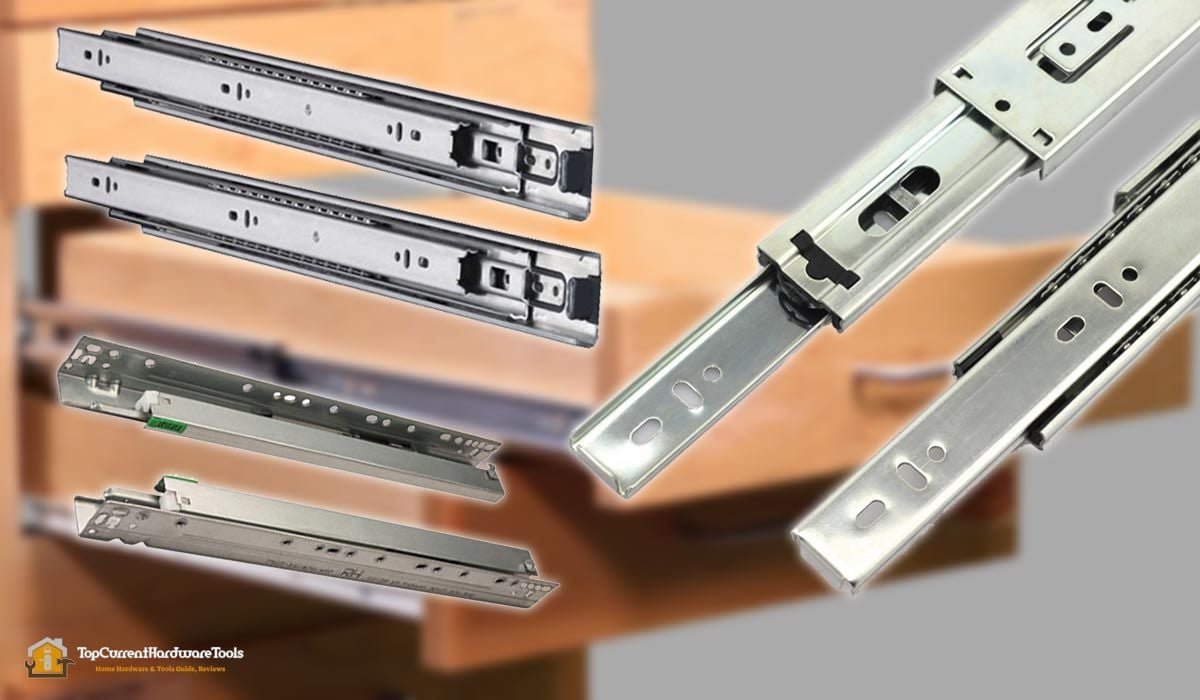
A slide connects a moving drawer member to a stationary cabinet member. Photograph both attachments. Some systems fasten directly to cabinet sides; others use front or rear brackets. A replacement runner without the compatible bracket may leave you unable to position it correctly, even if the runner length looks right.
Check whether the proposed hardware has dedicated left and right parts. Rockler calls these handed slides and notes that many undermount designs use them. Keep removed components labeled so you can compare their positions with the replacement drawing. Do not assume two similar-looking pieces are interchangeable.
Also inspect the material that receives the fasteners. A damaged drawer side, broken cabinet support, or loose joint is a different problem from a worn runner. Stop before buying hardware if those conditions prevent a sound attachment. The specification needs to cover the supporting structure, not just the moving part you can see.
Separate extension, closing action, and load rating
Extension describes how far the drawer travels. Partial extension leaves some of the drawer inside the cabinet; full extension gives access along the drawer’s length; over-travel moves it farther out. These terms describe access, not the location of the mounting hardware. Check the space in front of your dresser or desk as well as the space inside it.
Closing action is another separate choice. Rockler distinguishes self-close, which pulls a drawer closed near the end of its travel, from soft-close, which damps that final movement. Push-to-open is a further feature used to release a drawer by pressing its front. None of those descriptions proves that a slide will fit an existing box. Match the physical system first, then evaluate the features available within it.
Use the exact manufacturer’s load specification for the intended installation. Avoid treating a large weight rating as a substitute for compatible mounting, correct clearances, or sound furniture construction. A runner selected for a desk drawer and one intended for a heavily loaded file drawer may have different requirements even when both are advertised as full extension.
Build a replacement checklist before placing the order
Your shopping note should identify the furniture brand and model when known, mounting family, existing hardware markings, measured lengths and clearances, necessary brackets or clips, required extension, and desired closing action. Add clear photographs. Ask the furniture maker about an original replacement first, particularly when the assembly uses a proprietary runner or release mechanism.
If you are comparing alternatives, place the existing hardware information beside each candidate’s technical drawing. A useful comparison might read: “side-mount ball-bearing pair; verify closed length, both side gaps, bracket compatibility, and rated installation.” That is more informative than “soft-close drawer slides,” which leaves the fit unresolved.
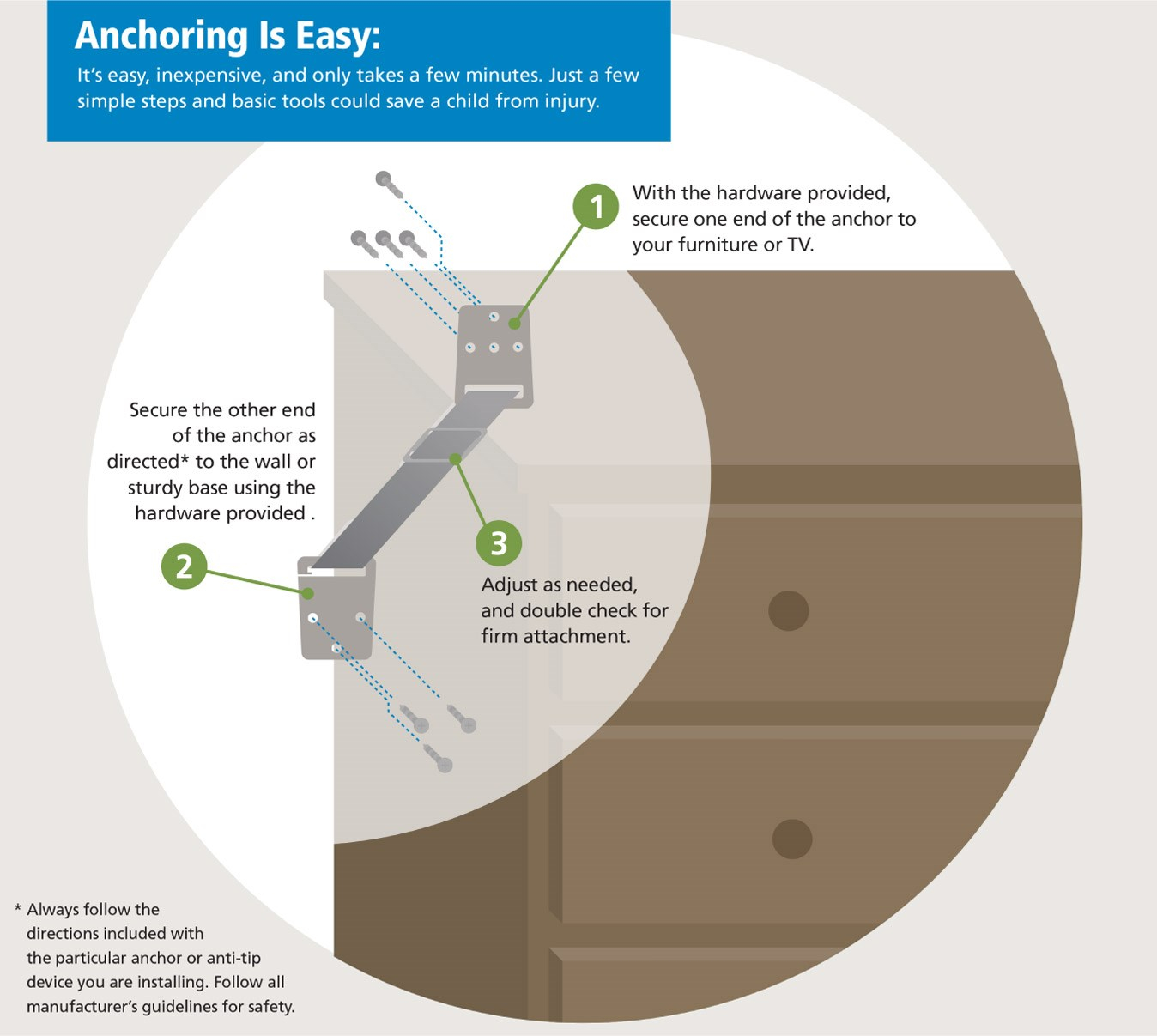
Maintain any required furniture restraint while inspecting the drawer. If anchoring itself needs attention, our guide to checking furniture and wall anchoring connections addresses that separate task. A new runner does not replace the furniture maker’s stability or restraint instructions.
Order only when you can explain how the replacement fits the drawer, cabinet, and attachment system. If a required measurement or bracket remains unclear, send the photographs and measurement sheet to the furniture maker or hardware supplier before proceeding. The most useful upgrade is a compatible slide that works with the furniture you have, supported by a clear installation plan.