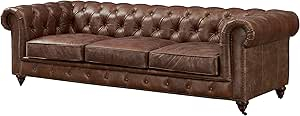
A tufted sofa needs attention in the folds around its buttons as well as across the seat. Those recesses can collect debris, while aggressive brushing or pulling can disturb the upholstery. Start with the sofa’s own care label: tufting describes its construction, not which cleaner its covering can tolerate.
In this guide
Identify the upholstery before cleaning
Find the fabric label, product information or retailer’s care sheet. La-Z-Boy’s upholstery care guide distinguishes water-based, solvent-based, combined and vacuum-only cleaning instructions. Use the instructions attached to your own sofa; a code is not blanket permission to steam-clean it or wash removable covers.
If the label is missing, ask the retailer to identify the upholstery from the order or product number. For leather or a coated synthetic covering, obtain the corresponding material-specific instructions rather than borrowing a fabric cleaning method.
Remove loose debris without pulling the buttons
Use an upholstery attachment on a gentle setting if permitted by the care instructions. Work over the broad panels first, then approach the folds carefully. Keep hard nozzle edges away from buttons and piping. Do not use a sharp tool to dig into a tuft.
Inspect the spaces around cushions and the underside of loose cushions. Pick up hard objects before moving a vacuum over the fabric. Check for loose threads or an unstable button; stop working on that area if movement could make the damage worse.
Respond to a spill in stages
Remove loose solids carefully. For liquid, use a clean absorbent cloth to blot without scrubbing, following the covering’s instructions. Avoid flooding the recessed areas around buttons. Before introducing a cleaner, confirm both that the fabric permits it and that the product instructions are suitable for the stain.
A persistent stain, an unknown covering or a large affected area is a reason to consult an upholstery cleaner. Tell them the material code and which products have already been applied. Mixing successive treatments can make the original problem harder to assess.
Keep the shape without stressing the tufting
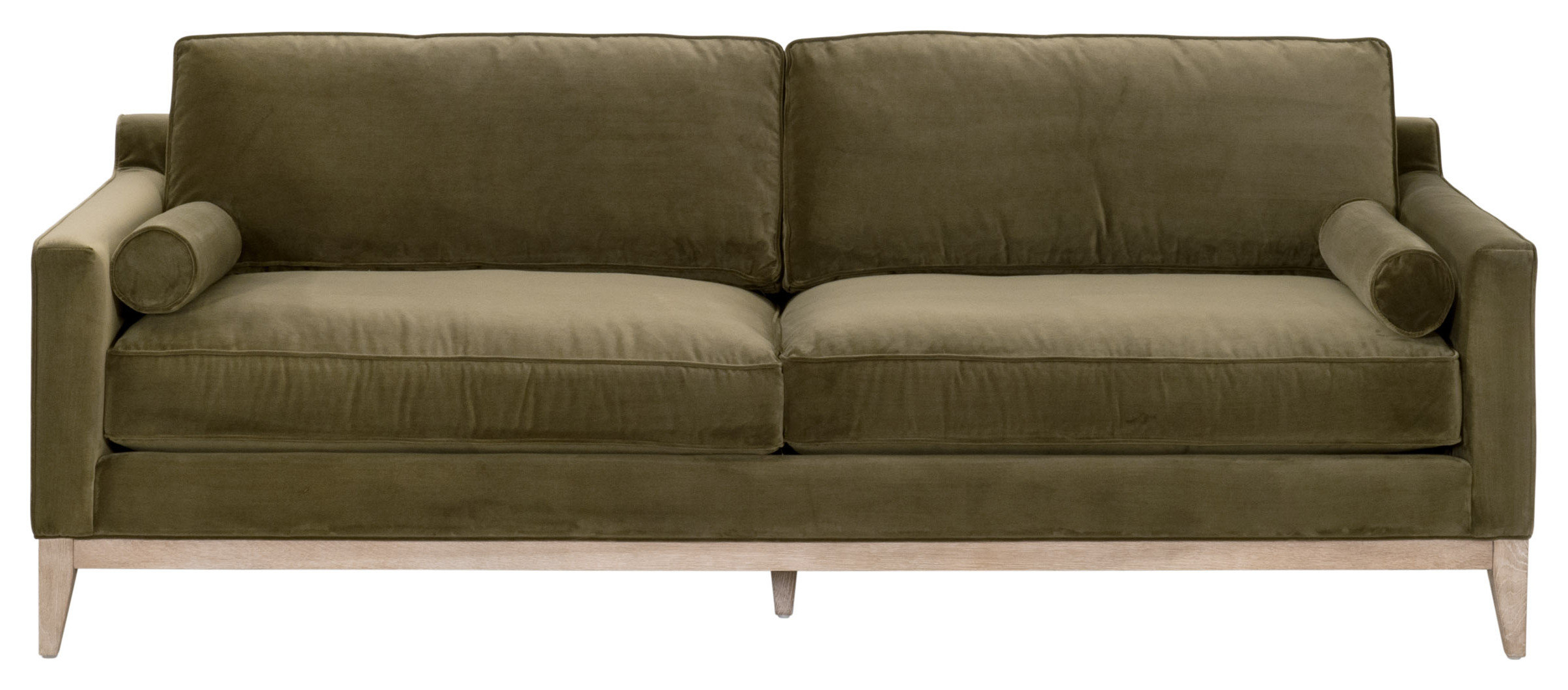
Rotate or turn loose cushions only when their design and instructions allow it. Fixed tufted panels are not removable cushions. Avoid pulling the sofa by its buttons or decorative trim when moving it, and use the manufacturer’s lifting guidance.
- Keep the care label and purchase details together.
- Inspect seams and buttons during routine dust removal.
- Arrange repair of loose tufting before continued use enlarges the problem.
- Ask about professional cleaning before attempting a whole-sofa treatment.
Small, appropriate maintenance steps are preferable to a strong cleaner used without knowing the upholstery.