Replacing drawer pulls can refresh a dresser without changing the furniture itself, but the replacement must fit the holes already in the drawer front. Start with the mounting pattern, then check the size you see and the space your hand needs. A pull that looks similar in a product photograph can still have different screw spacing.
In this guide
This guide covers ordinary two-screw pulls on dressers, nightstands, and similar household furniture. Single-hole knobs, recessed pulls, and damaged mounting holes need separate checks. The aim is a replacement that fits without enlarging holes or forcing screws into place.
Separate hole spacing from overall length
The essential fit measurement is center-to-center spacing: the distance between the centers of the two mounting holes. Emtek’s explanation of cabinet hardware sizing identifies this measurement as the basis for matching new hardware to existing holes. The same principle applies to a two-screw pull on a furniture drawer.
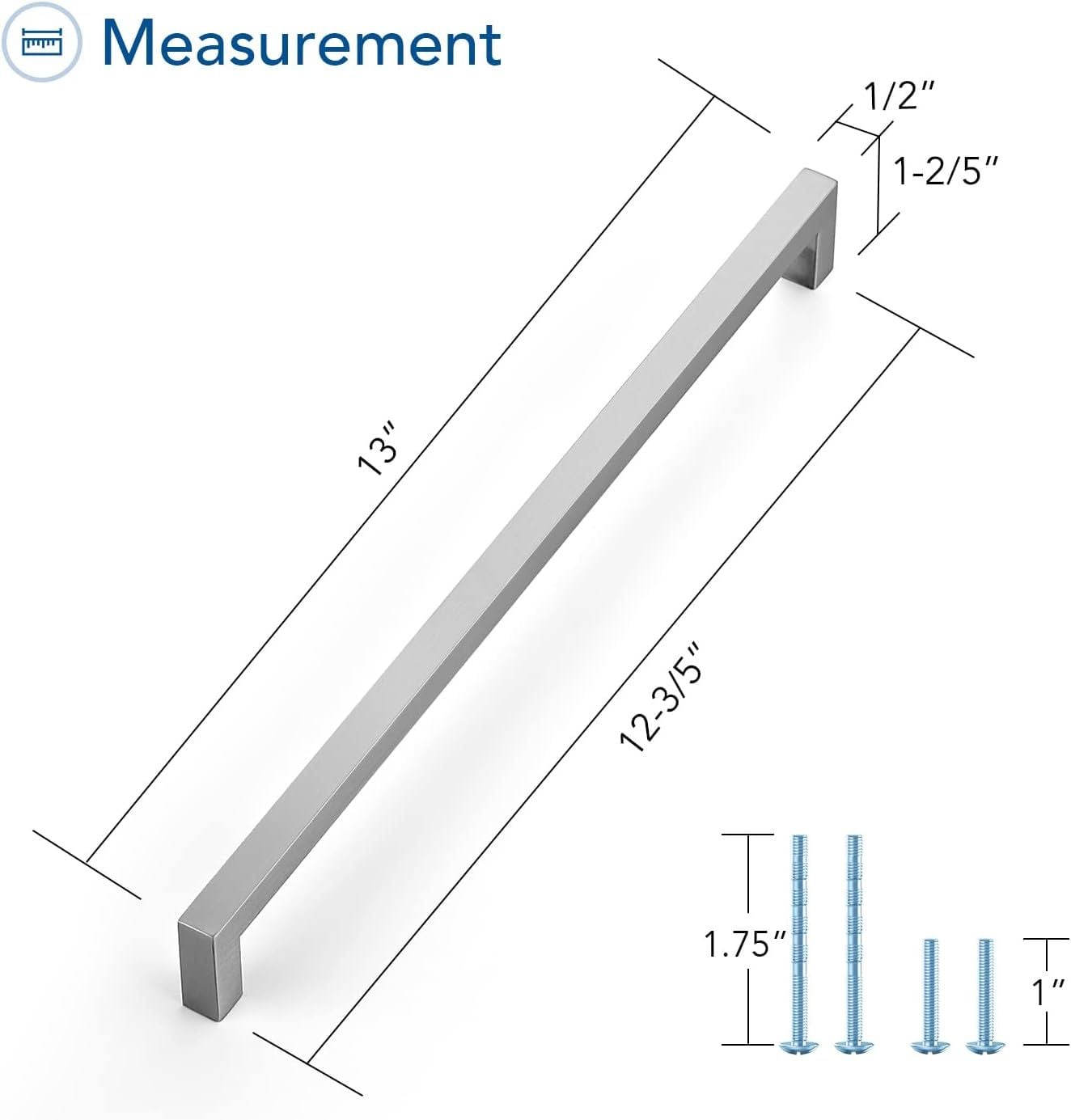
Overall length describes the entire visible handle, including any ends extending beyond its mounting posts. Projection describes how far the handle extends from the drawer face. Neither dimension replaces the mounting measurement. Two handles can share hole spacing while having different overall lengths, shapes, or room behind the grip.
Write these dimensions on separate lines. A note that says only “four-inch handle” leaves it unclear whether you measured the mounting centers or the complete handle. Shopping from that note invites an avoidable mistake.
Inspect the back before taking anything apart
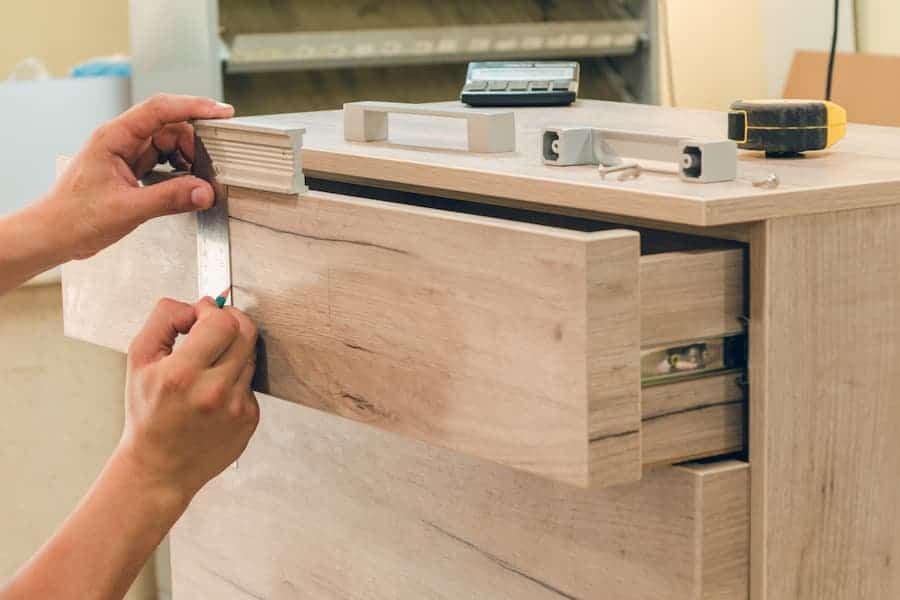
Open the drawer and photograph the rear of its front panel. Look for the screws associated with the pull and check whether a second panel obscures them. Keep unrelated assembly fasteners in place. If access requires removing a drawer, follow the furniture or slide manufacturer’s removal instructions rather than pulling against a stop.
Hold the handle while loosening its mounting screws so it cannot drop or scrape the finish. Put the screws and pull together in a labeled bag. Photograph any washers or spacers before removing them, and record which drawer they came from. Furniture can contain more than one handle size even when all its fronts appear similar.
If a screw spins without loosening, or the handle seems glued to the finish, stop and investigate. Measuring a damaged or modified attachment as though it were an ordinary removable pull can lead to the wrong purchase.
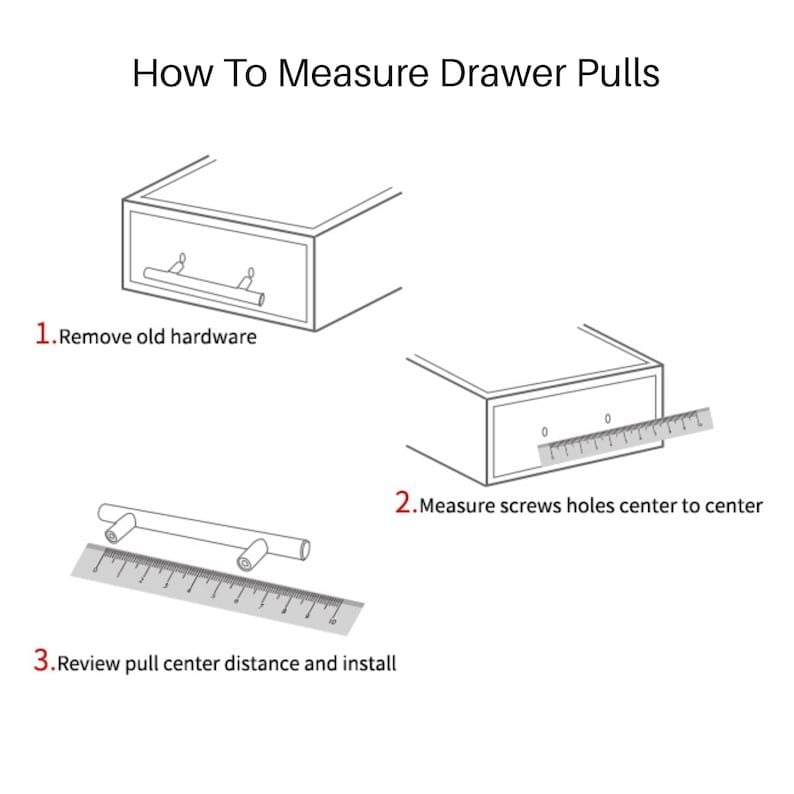
Measure the centers of the existing holes
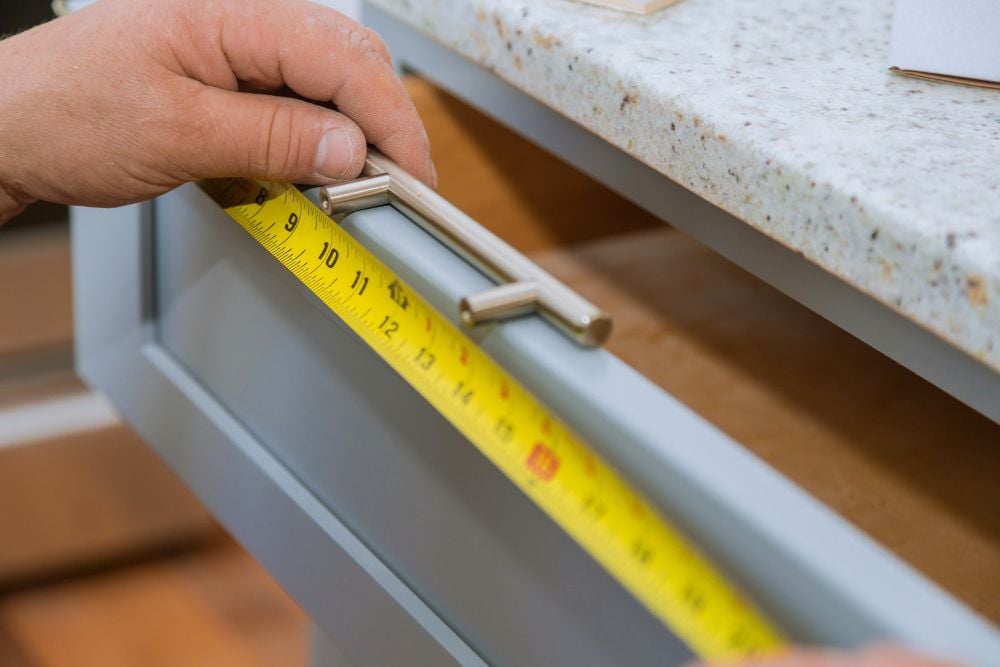
With an ordinary pull removed, lay a ruler flat against the drawer front and measure from the center of one mounting hole to the center of the other. Keep the ruler aligned with the line joining the holes. Read the measurement straight on; an angled photograph can make the apparent spacing misleading.
Repeat the measurement on the removed pull’s mounting posts or screw openings when they are accessible. The two readings should agree. If they do not, check your ruler position and the hole condition before ordering. A broad decorative foot can hide an elongated hole, so the visible mark on the finish is not necessarily the screw center.
Record the units alongside the number. Measure another drawer as a cross-check, but do not assume every drawer is identical. Check any wider drawers, small upper drawers, and doors separately. This creates a useful shopping list instead of an average measurement that fits none of the pieces precisely.
Keep inch and metric listings distinct
US hardware listings can use either inches or millimeters. Emtek notes that both systems occur and recommends checking the actual measurements before buying. Compare the product’s stated mounting centers with your measured spacing, using its technical drawing when available.
For an illustrative comparison, 96 millimeters is about 3.78 inches, while four inches equals 101.6 millimeters. A casual description of both as “about four inches” loses a meaningful difference. Do not assume a nominal or rounded product label establishes compatibility. Check the manufacturer’s exact specification for the model you intend to order.
If your ruler cannot distinguish nearby sizes confidently, use a clearer metric ruler or ask the supplier to help identify the removed pull. Send a photograph with the ruler in the same plane as the mounting points. Preserve the original measurement rather than rounding it to whichever listing is easiest to find.
Check coverage, grip space, and neighboring furniture
Once the hole spacing matches, compare the replacement’s mounting feet with the marks left by the old hardware. A smaller foot may expose an old finish outline even when both screws fit. That is a cosmetic planning issue, not a reason to move the holes automatically.
Check the handle’s overall length against drawer edges, applied trim, and adjacent pulls. Then consider projection and the usable opening behind the grip. A handle can fit the holes yet feel awkward to grasp. Try a sample with the person who will use the drawer rather than choosing solely from an isolated product photograph.
Open neighboring drawers and doors through their normal travel during the trial fit. Watch for handles meeting each other or a nearby wall. Check the furniture in its actual position; a sample tested away from a corner may not reveal the clearance problem that matters at home.
Match the screws to the replacement and drawer front
Keep the original screws as references, but do not assume they fit the replacement pull. The new hardware’s specified thread, the drawer-front thickness, and any additional front panel affect what is needed. Ask the supplier for compatible screws if the supplied set does not suit the furniture.
During a trial fit, support the pull and start the correct screws gently by hand. Stop if they resist, enter at an angle, or tighten while the handle remains loose. A screw can reach the end of a threaded opening before clamping the handle properly. More force will not correct that mismatch.
Follow the hardware instructions for installation and tightening. Do not solve an unknown thread or length problem by adding improvised spacers or driving the screw harder. Confirm that the mounting feet sit as intended without crushing or distorting the drawer front.
Test one pull before buying the full set
Order or inspect one sample when practical. Confirm the model, mounting centers, finish, grip space, screw compatibility, and coverage on an actual drawer. Photograph the successful trial and retain the product number with your measurements before ordering the remaining quantity.
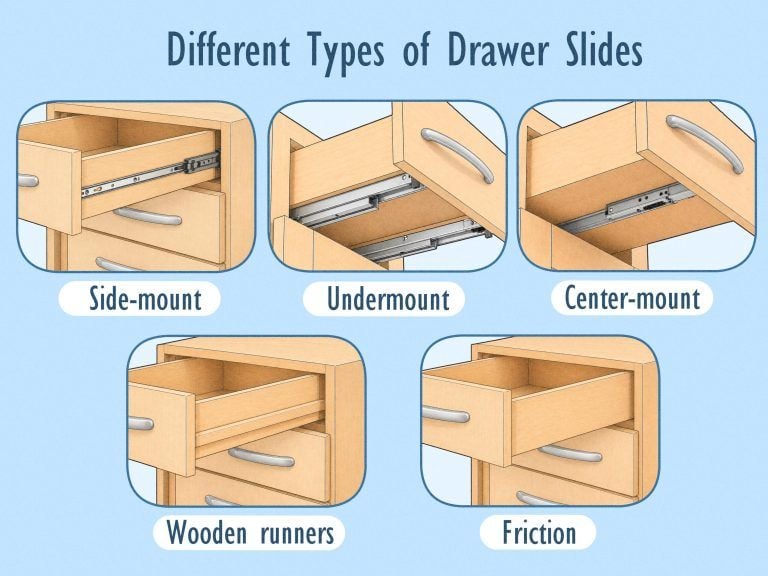
If the drawer itself drags or will not close, changing the pull addresses a different problem. Our guide to identifying drawer slide types helps separate slide replacement from handle selection.
Finish with a record for each hardware size: hole spacing and units, overall dimensions, drawer location, and the confirmed replacement model. Matching the mounting points first, then testing appearance and daily use, gives you a repeatable way to replace the remaining pulls without guessing.