Cabinet door overlay is the distance that a closed door covers the cabinet opening on the hinge side. It is not the gap between neighboring doors, the width of a face frame, or the diameter of a concealed hinge cup. Measuring the correct feature helps you narrow replacement hinges before ordering a matching finish or a soft-close option.
In this guide
This guide is for US homeowners identifying hardware on a cabinet, sideboard, or other storage furniture. It covers recording an existing arrangement. It does not assume that a new hinge can reuse every hole, or that changing a hinge will repair a damaged cabinet. Keep the original parts and a clear measurement record until compatibility is confirmed.
Identify the cabinet construction first
Open the door and look at the cabinet front where the hinge attaches. A face-frame cabinet has a separate frame across the front of the case. On a frameless cabinet, the case side extends to the front without that separate frame. Rockler’s European Hinge Buying Guide distinguishes these constructions and says to choose a hinge kit that matches the cabinet type.
Photograph the attachment on the cabinet and the connection on the door. Include the whole open door in another picture. A close-up of a metal arm alone may omit the information needed to tell how it mounts.
Do not assume that “European hinge” means frameless cabinets only. Rockler describes options for both constructions. Likewise, a cabinet that looks similar from across a room may have a different frame or mounting arrangement inside. Identify each distinct cabinet construction before treating several doors as a single order.
Decide whether the door is overlay, full inset, or lipped
Close the door normally and observe how its edges relate to the opening. An overlay door sits in front of the opening and extends over the surrounding frame or case edge. A full-inset door sits within the opening, with its face flush with the cabinet front in the arrangement Rockler describes.
A lipped or partial-inset door adds another detail: a step, called a rabbet, around its back edge. Rockler discusses a 3/8-inch inset arrangement, but that name should prompt inspection of the actual profile rather than an assumption about your furniture’s dimensions. Photograph the edge with the door open.
If the door is full inset, you are identifying an inset hinge application rather than searching for a positive overlay measurement. If it has a stepped edge, send the profile and dimensions to the supplier. Do not force either arrangement into an overlay category because the hinge in a search result has a similar appearance.
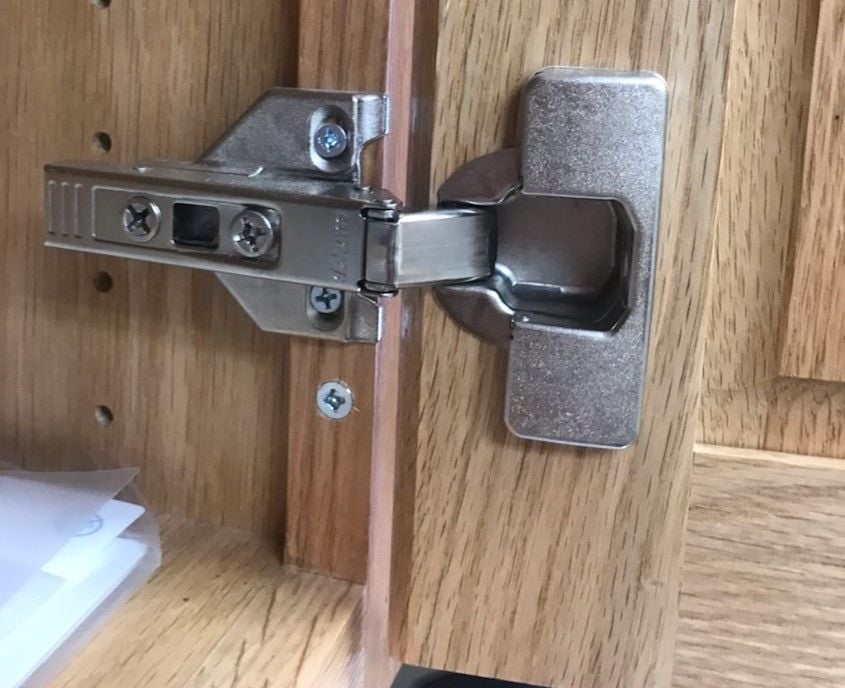
Mark the closed door edge, then measure the overlap
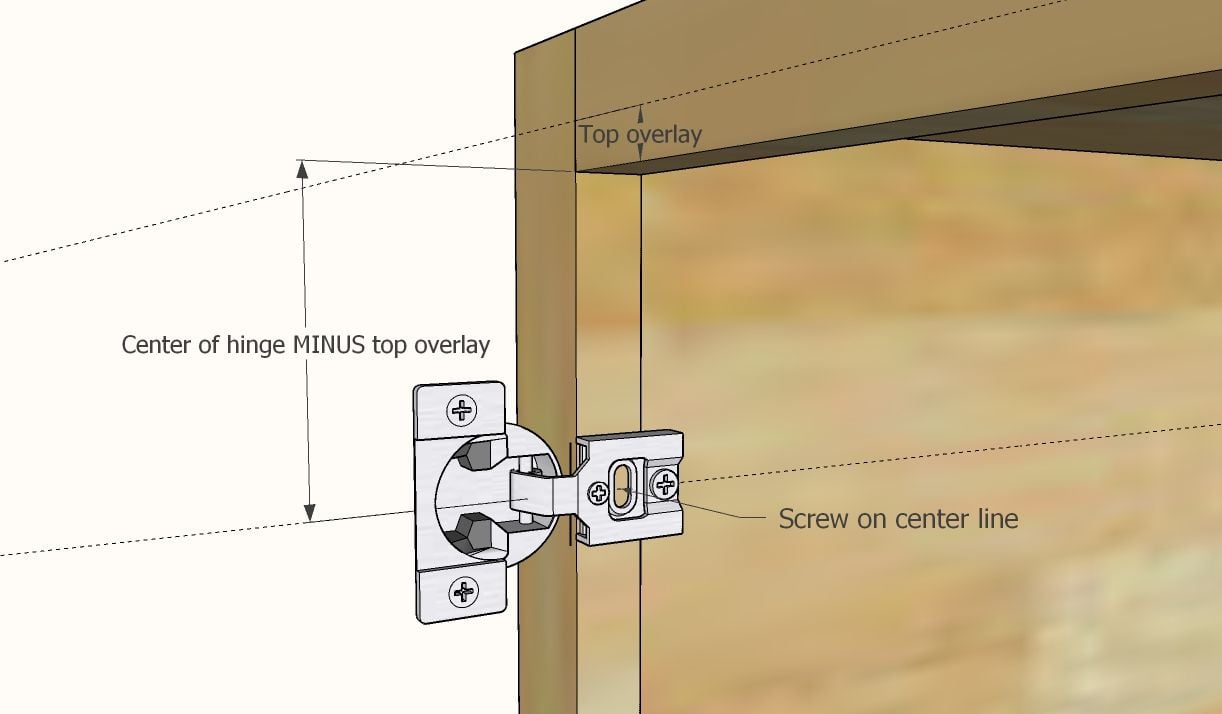
For an overlay door, locate the hinge-side vertical edge while the door is closed. Rockler’s method is to make a small pencil mark on the cabinet face where that edge covers it, then open the door and measure from the inside edge of the opening to the mark.
Use a marking method that will not damage the finish. If you cannot mark the surface safely, photograph the relationship and ask the supplier how it wants the measurement documented. Do not scratch a permanent reference line into finished furniture.
With the door open, place the ruler across the cabinet face, square to the opening edge. The measured span between the opening and your reference line is the hinge-side overlap. Record the exact fraction in inches, or the metric measurement if that is how your ruler and product drawing are marked. Keep the original unit rather than relying on a rounded conversion.
As a fictional example, suppose the opening edge and reference line are 1/2 inch apart. The record would say “hinge-side overlay: 1/2 inch,” together with the cabinet construction. It would not say “half overlay,” because that phrase can describe a different hinge application.
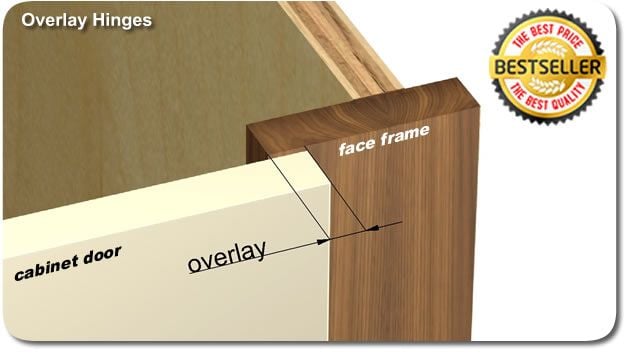
Do not confuse half overlay with a half-inch overlay
Rockler’s cabinet hinge guide specifically distinguishes half-overlay doors on a shared partition from 1/2-inch overlay hardware. One phrase describes how doors share the cabinet side; the other states a measured overlap. Those labels should not be exchanged in an order.
Full overlay is also an application description, not one universal dimension for every cabinet. Keep the measured hinge-side overlap alongside the construction type and the manufacturer’s drawing. The visible gap between two doors is a separate observation.
For paired doors, label the measurements for each door. Do not divide the overall width difference and assume both sides match. If a door is sagging, loose, or clearly misaligned, record that condition before relying on its closed position as the intended design. Ask the supplier or repairer to distinguish the original application from the current fault.
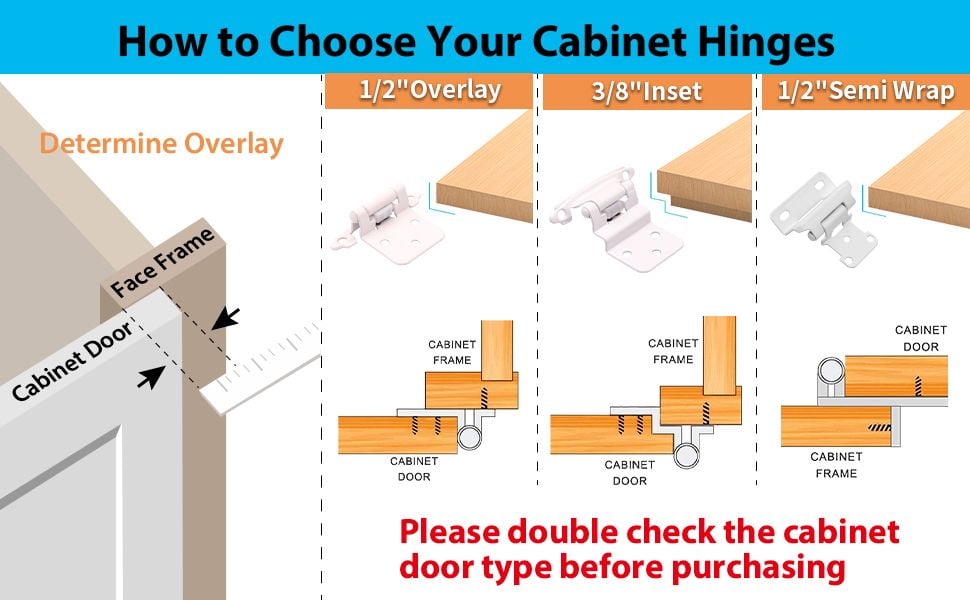
Identify the hinge and mounting plate as a system
Look for stamped names or reference numbers on the hinge and its mounting plate. Photograph them before removing anything. Blum’s US hinge range links an identification guide organized around physical appearance and reference numbers, and lists different hinge applications and mounting plates. That is a useful reason to identify both pieces rather than matching only the visible arm.
Overlay alone does not settle cup dimensions, fixing locations, door thickness, mounting-plate compatibility, or the opening angle. Compare those features with the exact replacement’s documentation. Rockler notes that a door beside a wall may need a restricted opening, while interior pull-outs can require the door to clear the opening. Include those constraints in your request.
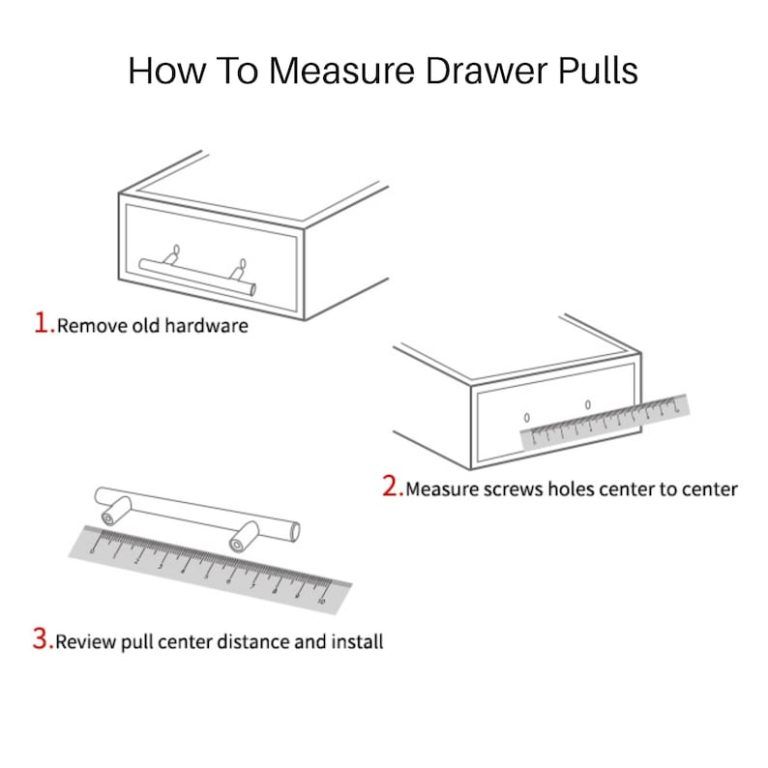
Keep unrelated hardware measurements on their own sheet. If the same furniture also needs new handles, our guide to measuring replacement drawer pulls covers hole spacing. A handle’s spacing does not identify a hinge’s mounting pattern.
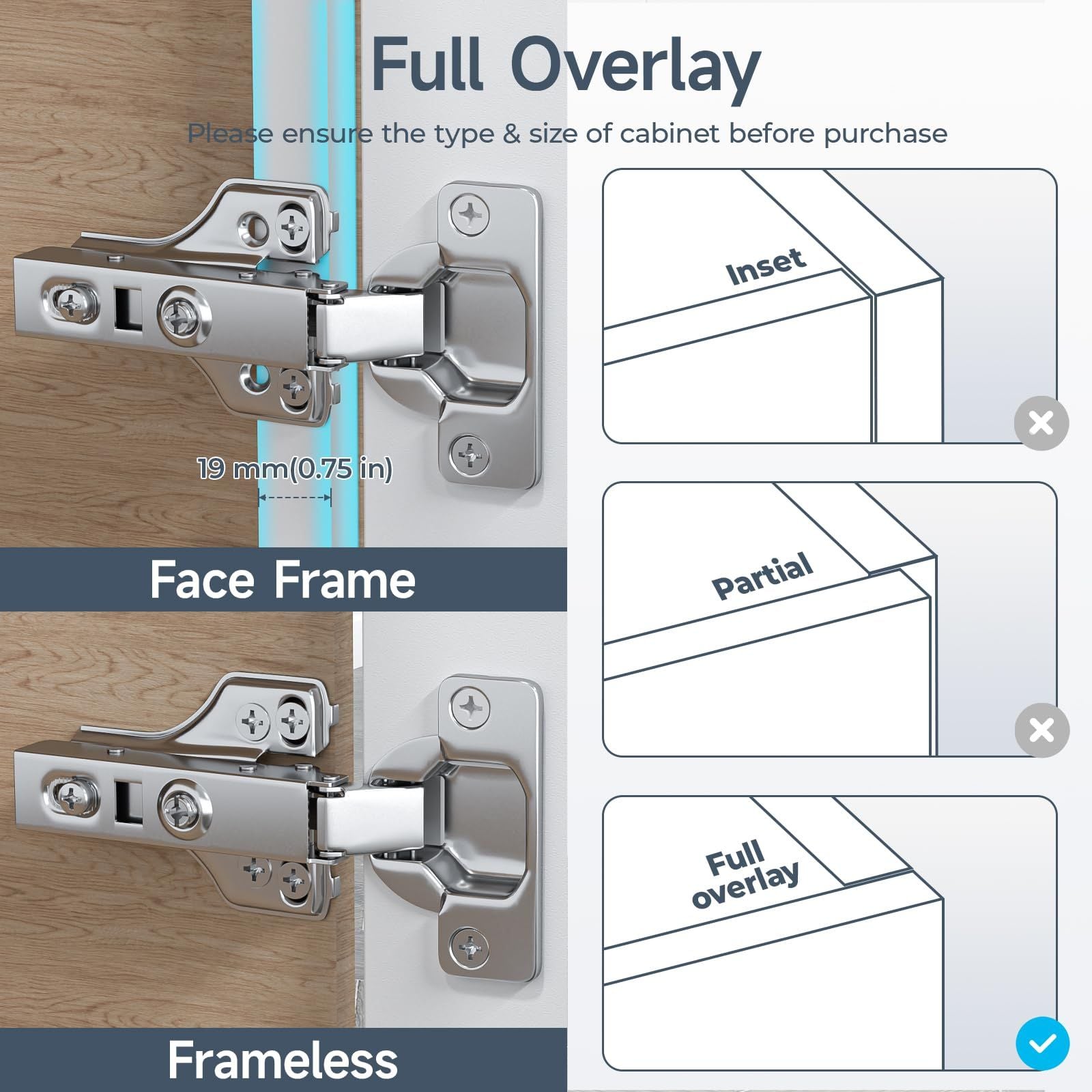
Order from a complete record, then confirm one application
Your record should contain cabinet construction, door application, measured hinge-side overlay where relevant, hinge and plate references, and photographs of both attachments. Add the door profile and any uncertain measurements. Ask the supplier to confirm the replacement combination and whether the existing preparation can be retained.
Before buying a full set, confirm one representative application with the supplier and the product instructions. Support the door appropriately during any authorized removal or installation. A clear overlap measurement starts the selection; a confirmed match between the door, cabinet, hinge, and plate completes it.